
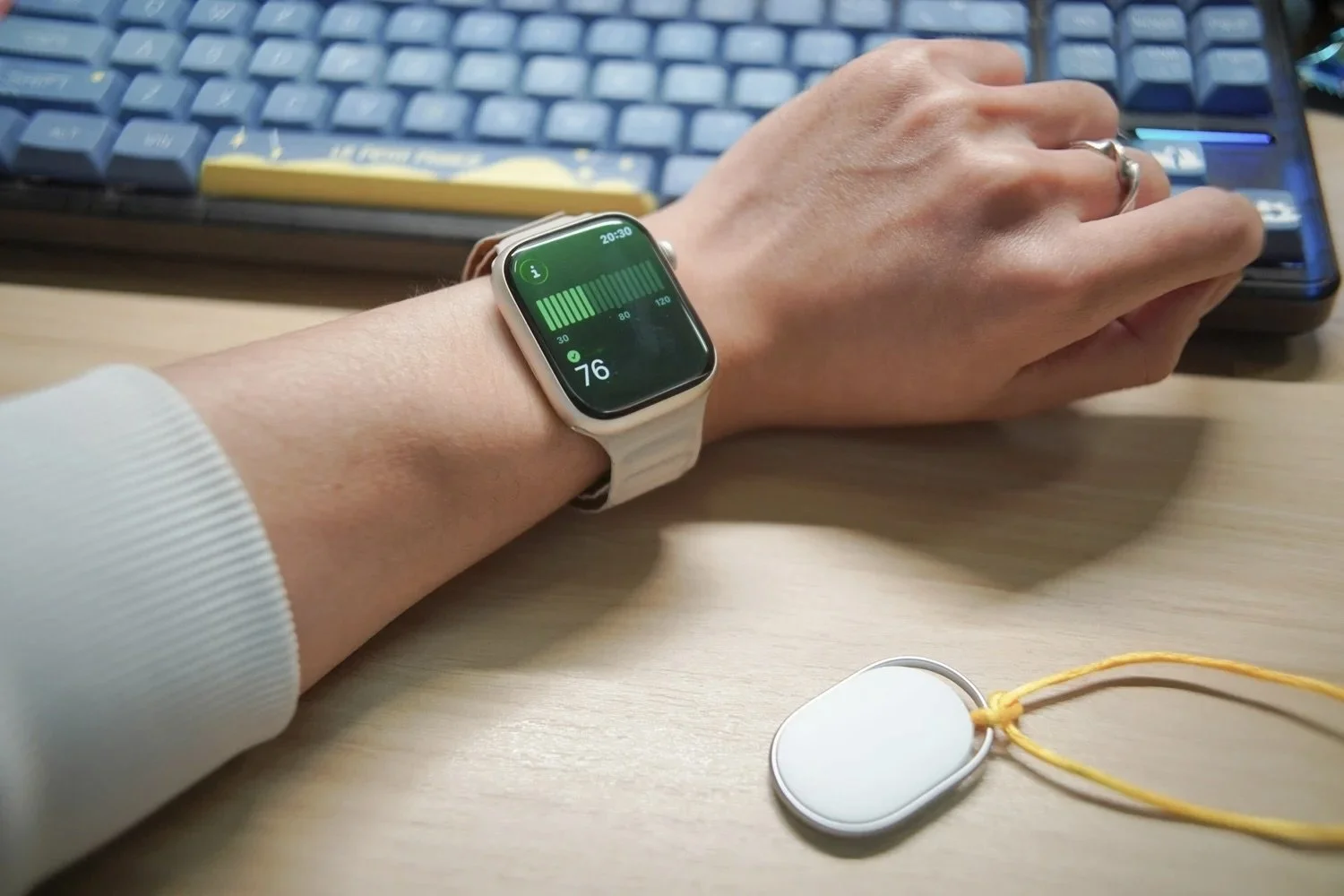
One morning last week I woke up feeling like I had slept pretty well.
My body felt okay. My mind felt clear. I felt excited and ready to move into the day.
Then I checked my ring...
The score told a different story.
And almost immediately, I started second guessing myself.
Maybe I didn't sleep well. Maybe I wasn't ready for the day. Maybe I really did need to take it easy.
It was such a strange moment because before I looked at the number, I had felt really good. But once I saw the score, it started to change how I felt about my body and what I expected from the day.
That stuck with me.
Because I love good information. I love patterns. I love noticing what helps. I love when data gives us a clearer picture of what is happening in the body.
But I realized that we have to be careful.
Somewhere along the way, many of us have started looking outside of ourselves to find out how we are doing.
We wake up and check a device. We notice our sleep score, recovery score, readiness score, resting heart rate, overnight glucose pattern or whatever number is supposed to tell us how prepared we are for the day.
And sometimes, before we have even had a chance to ask, "How do I feel?" a device has already answered for us.
Wearable Health Data Is Helpful, But It Is Not the Whole Story
Wearables can give us interesting and sometimes very useful information.
A sleep score may help you notice that a stressful evening, late screens or alcohol affects your sleep. I may want to ignore the pattern of worse sleep after a glass of wine, but the data has a way of reminding me.
A glucose monitor may show you how certain foods, types of movement, sleep and stress influence your blood sugar.
A step count may help you notice whether movement has been missing from your day.
I am not against data. I use it. I recommend it. I think it can be empowering.
But data is only one form of information. It's so easy to forget that your energy is information.
Your hunger is information. Your mood is information.
So are your cravings, digestion, sleepiness, focus, anxiety, strength, patience and capacity.
Sometimes the number confirms what you already know. Sometimes it gives you a clue you would not have seen otherwise.
But sometimes it pulls you away from your own body.
And that is where I think we need to pause.
When Fitness Trackers Create More Stress
The problem is not the wearable. The problem is when we give the wearable more authority than our own experience.
A low recovery score can make a perfectly okay morning feel heavy. A poor sleep score can convince us we are exhausted before we have really checked in.
A glucose spike can make us feel like we did something wrong instead of helping us ask what we could learn.
Or maybe you went for a walk, lifted weights or moved your body in a way that felt good, but forgot to start the workout on your watch. Suddenly, it feels like it didn't count because it wasn't recorded.
But your muscles still moved. Your heart still responded. And your body still received the benefit.
The watch may have missed it, but your body didn't.
When the number becomes the final word, we can slip into fear, judgment or a sense of hypervigilance around our bodies.
And ironically, that can create more of the stress we are trying to recover from.
Tracking should not make us more anxious. At its best, it should help us become more connected, more curious and more responsive.
Your Body's Signals Still Matter
Before you check the app, stop and consider what you notice.
Do you feel rested? Do you feel foggy?
Do you feel hungry? Do you feel steady?
Maybe your body is asking for more food, more water, more movement, more stillness or more sleep.
Just ten seconds of checking in can help you hear that before the device has its say.
This does not mean we ignore the data. It means we put it in its proper place.
A wearable can offer a clue. Your body offers context.
And the context matters.
Maybe your sleep score was low, but you feel surprisingly well.
Maybe your recovery score is high, but you can tell you are emotionally depleted.
Maybe you did not hit your step goal, but you spent the day caring for people, thinking deeply, working hard or doing what your life required of you.
The number may be part of the story, but it is rarely the whole story.
How to Use Health Data Without Losing Trust in Yourself
This is how I want us to approach tools like wearables, glucose monitors and lab results.
Not as a report card or proof that we are doing it right or wrong. Not as one more thing to obsess over.
Just as information we can get curious about.
What helps me feel nourished? What helps me feel steady? What gives me energy? What makes me feel more anxious, depleted or disconnected?
And maybe the most important question: what does my body seem to be asking for?
That is the real work.
Because healing does not happen by handing all of our trust over to a device. It happens when we rebuild trust with ourselves.
So the next time you reach for your ring, watch, monitor or app, maybe pause for a moment first.
Put a hand on your body. Take a breath and ask yourself: How do I actually feel?
Then look at the data if you want to.
But remember, your body has been talking to you all along.
The goal is not to silence that voice with more numbers.
The goal is to learn how to listen.