
I Thought I Was Worried About His Deadlines
I was getting worried about my son’s college applications.
I felt like we were running behind. I wanted him to be more proactive, and I could already imagine the scramble at the end if everything wasn’t finished in time.
There was still so much to do. I wanted to know it was being handled so I could relax.
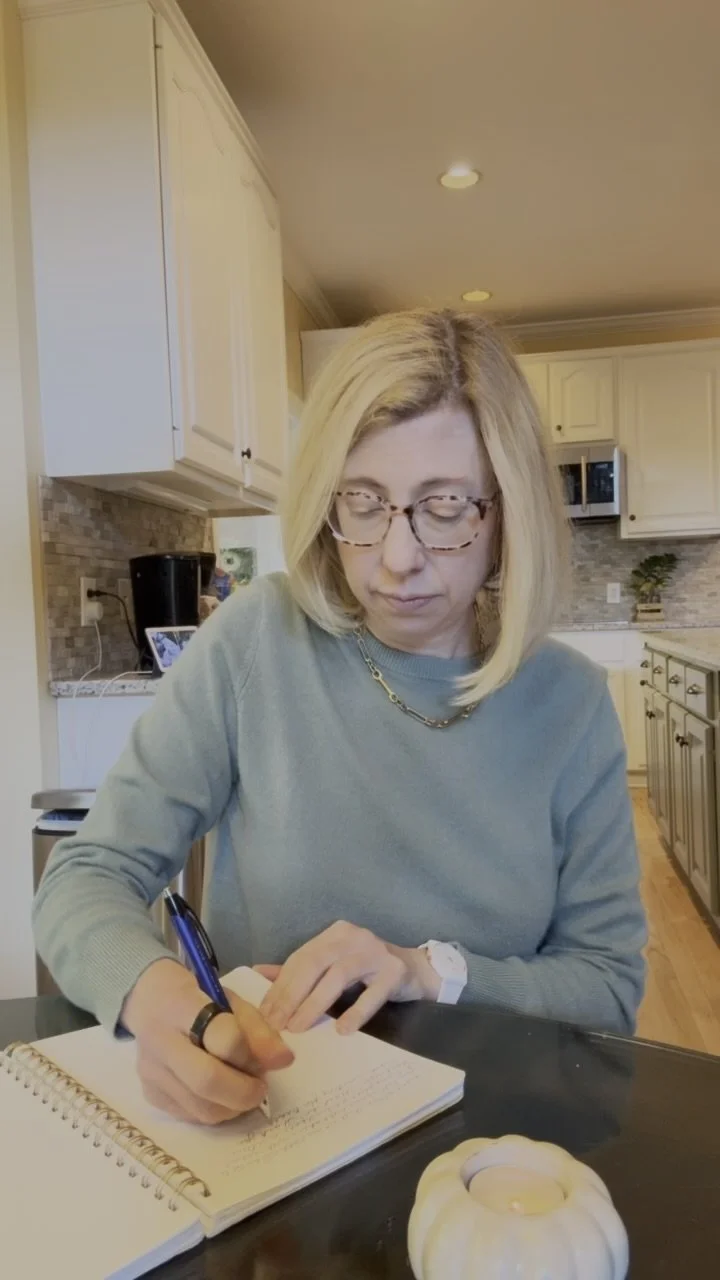
Eventually, I sat down with my journal.
I often begin with “I feel so…” and let whatever comes next be honest. This time, there was plenty to write about. My concerns about the timing. What I thought he should be doing. My fear that we would end up trying to get everything done at the last minute.
But as I kept writing, I recognized something.
That feeling of having a deadline hanging over me was familiar. It brought me back to medical school, when there was so much to do and I had trouble relaxing with unfinished work ahead of me.
I was feeling some of that old fear in a situation that involved my son.
And when I paused long enough to look at his history, I could see things I hadn’t been giving enough weight.
He had never missed a deadline. He cared about doing his best work. He worked differently than I did, but that didn’t mean he wasn’t going to follow through.
My worry had made it harder to appreciate those things about him.
Writing helped me recognize that we were okay in this situation. I could stay involved without treating my fear as evidence that something was going wrong.
And when I leaned into confidence in his abilities, he felt more confident, too.
When a Feeling Takes Up the Whole Picture
I’m grateful I gave myself time to write before continuing to respond from that worried place.
I could have spent all those pages making a stronger case for why he needed to do things my way. Instead, as I wrote, I began to understand why the situation felt so uncomfortable to me.
I’ve noticed this in my journaling over the years. I may begin with a complaint or a problem, pouring out the details and concerns. Gradually, my words often become more reassuring. I can see another possibility or remember something that wasn’t getting much attention.
The circumstances may be exactly the same when I close the notebook. But I feel less caught up in my first reaction, and that gives me more choice about what I do next.
You may recognize a version of this in your own life.
Someone you love approaches a task differently than you would, and you find yourself wanting to take over. Or you sit down to rest, remember everything unfinished, and feel as though getting back up is the only way to quiet your mind.
It can be hard to get curious when a feeling is that convincing.
Writing gives me somewhere to begin. I don’t have to know whether my reaction is reasonable or what I’m going to do about it. I can describe what’s happening and give myself a chance to hear it.
Making Room for What We’ve Overlooked
I’ve been thinking about this as we move into November and a season when we talk so much about gratitude.
With my son, appreciation became easier once I understood more of my fear. I could recognize his reliability and the effort he brings to his work. Those qualities had been there all along, even while I was focused on what might go wrong.
I wonder how often we do something similar with ourselves.
When you’re working hard to feel better, your attention naturally goes to what still needs help. You notice the afternoon fatigue, the digestive symptoms, or the clothes that feel uncomfortable. Those concerns matter, and they deserve attention.
But they can take up so much space that other parts of your experience barely register.
You might have enjoyed a walk but come home thinking only about how far you used to go. You might have asked for help sooner than you would have a year ago, then overlooked that change because you still wish you could manage everything yourself.
Appreciating those moments can feel difficult when you’re afraid that acknowledging anything good means settling for how things are.
I don’t think we have to choose that.
We can keep looking for answers while recognizing the ways we’re learning to respond. We can wish something were easier and still appreciate what our bodies have helped us experience.
Sometimes we need to give the frustration a little room before we can see any of that.
You Can Begin With What’s True
If you’d like to try writing, you don’t need to begin with a gratitude list or a beautiful journal entry.
“I feel so…” is enough.
You can write why you feel that way, if you know. You can also write, “I don’t even know why this is bothering me so much.”
Then give yourself a little time.
You may find a worry underneath the irritation. You may recognize an expectation you’ve been carrying, or remember something that helps you understand the situation differently. Some days, you may simply put words to something that’s been hard to explain.
There’s no need to make the entry end on a positive note.
For me, the value is in having a place to be honest long enough to understand myself better. From there, I’m often able to respond with more patience and a little more trust.
My son’s applications still needed to get done. We still had things to work through. But I could be there with him without letting my old fear decide how I approached the whole process.
I’m glad I picked up my journal.
In health,
Dr. Emily