
Before Life Speeds Up
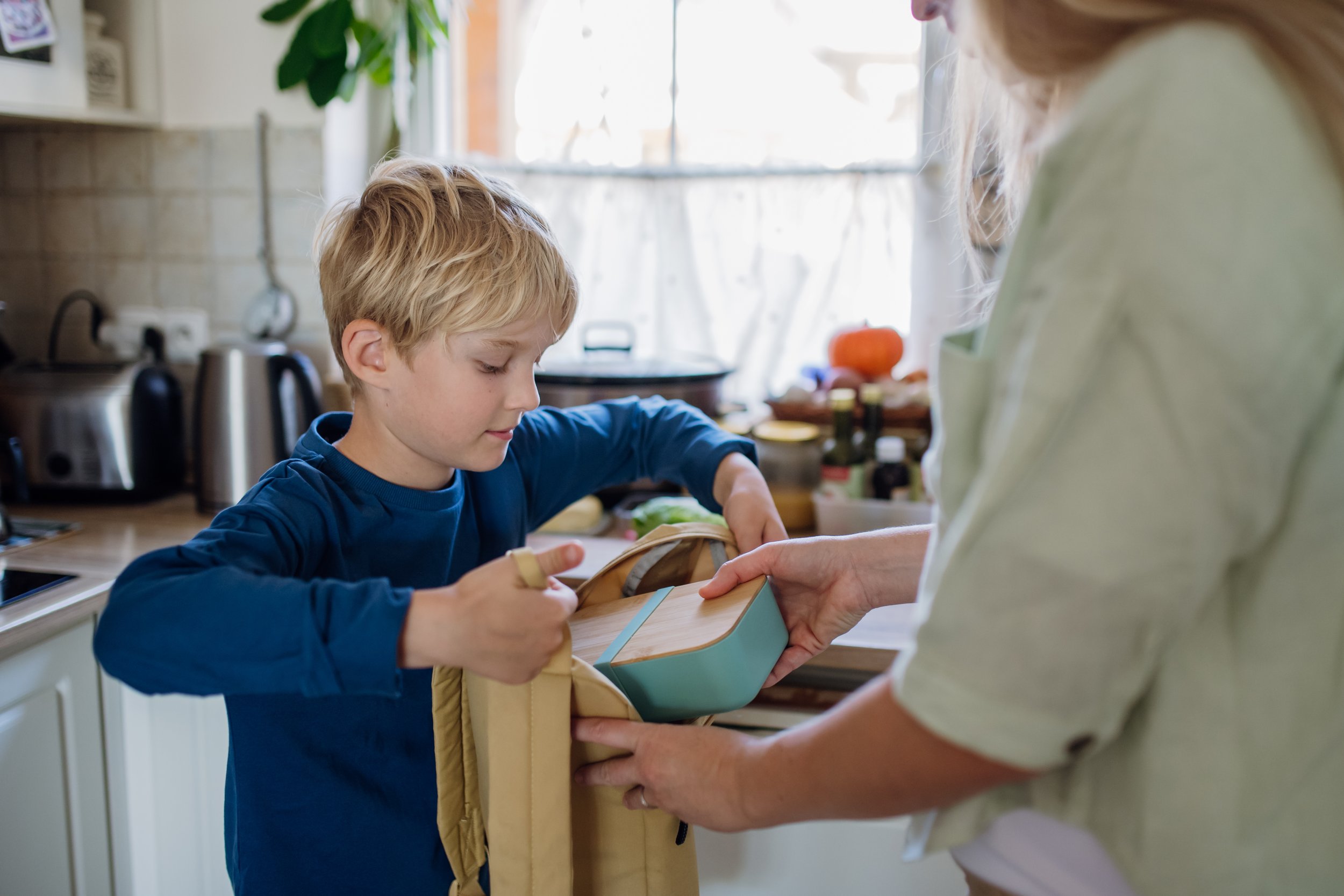
How to protect your healthy routines during the back-to-school transition
I have never liked the beginning of the school year.
I actually kind of despise it.
Every August, I feel a little like I am losing my children back to school. I know that may sound dramatic, but it is how I feel.
I am losing the ease and flow of summer. I am losing some of the carefree part of myself that seems easier to find when the mornings are slower and there are fewer places everyone needs to be.
I know school is necessary. I know my children are meant to grow, learn, spend time with friends, and build lives that extend beyond our home.
But I also know that once school begins, I will have less time with them.
Our days will become more focused on responsibilities than on simply having fun and enjoying time together.
The slower mornings will end. Spontaneous plans will become harder. Evenings will fill with practices, homework, preparation, and attempts to get everyone to bed at a reasonable hour.
And I mourn that a little every year.
Maybe summer is only so beautiful because it has an end. Maybe part of what makes it feel so precious is knowing that we cannot hold on to it forever.
But that does not make it easy to let go.
At the same time that I am feeling all of this, August begins asking more of me.
The forms start arriving—medical forms, emergency contacts, transportation plans, and pages requiring information I am certain I have already provided ten times before.
I think most moms can relate.
Sports practices begin again, and suddenly we are trying to figure out how one child will get to practice at the exact same time another needs to be somewhere across town.
There are school-supply lists to decipher, new schedules to navigate, clothes to try on, lunchboxes to find, and the quiet pressure to make sure everyone has what they need to walk into the first day feeling confident.
Bedtimes need to move earlier. Alarm clocks need to be reset. Circadian rhythms that have happily drifted later all summer are suddenly expected to cooperate with an early wake-up.
And then there is the emotional work.
We reassure the child who is worried none of her friends will be in her class. We help another imagine where he will sit at lunch. We listen to concerns about a new teacher, a harder workload, a different building, a new team, or simply not knowing what the year will bring.
We carry the schedules, supplies, lunches, transportation—and everyone else’s feelings about the transition.
All while trying to manage our own.
That is the tension of August.
We are grieving the ending of one season while being asked to prepare everyone for the next one.
And before fall has even officially begun, we can already feel ourselves speeding up.
Most of us do not consciously decide to stop eating breakfast, quit walking, stay up too late at night, or spend our days reacting to everyone else’s needs.
It happens gradually.
Life fills the available space. The urgent starts to replace the important. The practices that helped us feel grounded slowly disappear from the calendar.
Then we look up in November and wonder how we got so far away from ourselves again.
I cannot stop summer from ending.
I cannot remove every form, practice, early alarm, or emotional hurdle that comes with the beginning of a new school year.
But I can pause before the momentum takes over.
And I am inviting you to pause with me.
August offers us a small but important window—a moment to choose before the calendar begins choosing for us.
Before fall happens to us, we can decide how we want to move through it.
What Happens to Your Healthy Routines When Fall Gets Busy?
The question is not whether fall will get busy. For most of us, it will.
The more useful question is:
What happens to us when it does?
Busyness does more than fill our calendars. If we are not careful, it begins making our choices for us.
We do not consciously decide that rest, nourishment, movement, or connection no longer matter. But when everything feels urgent, the loudest need often wins—and our own needs are quietly moved to the bottom of the list.
Breakfast gets replaced by checking email.
A walk gets replaced by another errand.
An early bedtime gets replaced by trying to finish one more thing.
We tell ourselves it is temporary. We will return to ourselves when things settle down.
But one busy season often becomes the next.
If the routines that help us feel well only fit when life is easy, they may not truly have a protected place in our lives yet.
That is not a failure.
It is information.
It may simply mean that our well-being has been fitting into the leftover spaces. And when practices begin, meetings increase, and everyone needs something, there may not be any leftover space.
This is why I do not think the answer is to become more rigid or create the perfect healthy fall routine.
Life with children, work, family, and changing responsibilities rarely unfolds according to a perfect plan.
The goal is not to control everything that happens this fall.
The goal is to remain connected enough to ourselves that we can still make choices within it.
We may not be able to control every demand, but we can decide what deserves our energy, what needs to be protected, and what we are no longer willing to surrender automatically.
Choose a Direction Before Urgency Chooses One for You
Most of us begin planning fall by looking at what needs to happen.
We add school dates, practices, appointments, meetings, deadlines, and family responsibilities to the calendar.
That is necessary.
But before we fill every open space, there is another question worth asking:
How do I want this season to feel?
Not: What do I want to accomplish?
Not: How much can I fit in?
How do I actually want to feel as I move through my days?
Maybe you want to feel steady instead of rushed.
Present instead of distracted.
Energized instead of depleted.
Connected instead of pulled in ten directions.
Supported instead of responsible for holding everything together alone.
The feeling you choose will not remove the demands of the season. But it can help guide the choices you make within it.
Then ask yourself one more question:
What do I want to still be true about my life in November?
When the newness of the school year has worn off, the days are shorter, and the holidays are approaching, what do you hope busyness has not quietly taken from you?
Maybe you still want to be eating something nourishing in the morning instead of surviving on coffee until noon.
Maybe you want to still be walking outside or leaving one evening unscheduled.
Maybe you want to be laughing with your family instead of spending every interaction reminding someone what needs to happen next.
Maybe you simply want to feel like you are still present in your own life.
Choose one or two things.
Not ten.
We cannot preserve every part of summer. Some things will naturally change. But we can decide what matters enough that we do not want urgency to make the decision for us.
Creating Your Fall on Purpose Plan
Living intentionally by creating healthy routines for a busy fall season does not mean planning every detail or controlling every outcome.
It means making a few decisions ahead of time about what matters—so those decisions are not made later by a full calendar, someone else’s urgency, or our own exhaustion.
This is how we keep ourselves in the equation.
You do not need a complicated schedule, a new planner, or a complete overhaul of your life.
Start with five simple choices.
1. Choose one feeling
How do you want fall to feel?
Pick one word that can help guide your decisions.
Steady. Spacious. Connected. Nourished. Present. Energized. Calm.
2. Choose one priority
What part of your well-being needs to remain visible when life becomes busy?
This is something you know you need in order to feel like yourself. It might be sleep, breakfast, time outside, movement, connection, or rest.
That is your priority.
3. Choose one rhythm
What small, repeatable action would support that priority?
A rhythm is different from a rigid routine. It can adapt to your life.
It might be eating breakfast before opening your laptop, walking for ten minutes after dinner, going outside before beginning your day, or leaving one evening each week unscheduled.
Choose something small enough that it can continue even during a difficult week.
4. Choose one boundary
What will protect that rhythm?
Maybe you release one evening activity that no longer brings your family joy.
Maybe you stop saying yes to appointments or invitations during the small pocket of time you have set aside for yourself.
Maybe you ask someone else to help.
Maybe you decide that an open space on your calendar does not automatically need to be filled by your to-do list.
A priority without a boundary is often only a wish.
A boundary turns it into a choice.
5. Notice your warning sign
How will you know you are slipping back into reaction mode?
Maybe you stop eating until late in the day and then find yourself reaching for sugar.
Maybe every small request begins to irritate you, even when coming from your favorite people.
Maybe you stay up too late because nighttime is the only part of the day that feels like your own.
Maybe you stop going outside, cancel the things you enjoy, or begin telling yourself that you will take care of yourself later.
Your warning sign is not evidence that you have failed.
It is an invitation to pause and choose again.
The Permission Slip
Sometimes we do not need a better plan.
We need permission to make choices that reflect what we truly value—not only what feels most urgent.
So here is the permission slip I am writing for both of us:
We are allowed to protect what helps us feel grounded.
We are allowed to consider our own capacity before saying yes.
We are allowed to leave open space open.
We are allowed to make room for what matters before everything else claims that room.
We are allowed to create rhythms that support the lives we are actually living—not the perfect lives we imagine we should be able to manage.
Our families can feel the difference between seasons when we are stretched thin and moments when we have enough space to slow down, listen, and enjoy one another.
This is not about doing it perfectly.
It is about remembering that our well-being belongs in the family equation, too.
Carrying Summer With Us
I know I will still feel sad when summer ends.
I will wish for a few more slow mornings, a few more spontaneous days, and a little more time before everyone returns to their routines.
I will still fill out the forms, buy the supplies, adjust the bedtimes, and help my kids carry whatever feelings come with the beginning of a new school year.
I cannot keep summer from ending.
But perhaps I can carry something from summer with me.
I can carry the reminder that life does not become meaningful only after everything is finished.
I can leave room to enjoy my kids instead of only managing them.
I can protect moments of rest, laughter, nourishment, and connection—not because I have completed every responsibility, but because those moments are part of a life well lived.
Maybe that is what I most want to preserve this fall.
Not a perfect routine.
Not a perfectly balanced calendar.
Just the feeling that I am still here for my life.
Still present with the people I love.
Still listening to my body.
Still making my own choices instead of allowing urgency to make every choice for me.
So before life speeds up, I am going to pause.
I am going to ask myself what matters and make room for it before the calendar fills every available space.
I cannot control everything the next season will ask of me.
But I can choose how I want to meet it.
I can decide what I want to protect.
And when I notice myself beginning to live on default, I can pause and choose again.
Fall will come either way.
Perhaps part of loving summer is accepting that it cannot last forever.
But I do not have to leave myself behind as I enter the next season.
And neither do you.
By: Dr. Emily Roedersheimer
Dr. Emily Roedersheimer is a functional medicine physician and founder of Balanced Living Functional Medicine. She helps women create practical, sustainable ways to support their health without allowing wellness to become another source of pressure.